How to start trading in 2026 with a step-by-step beginner plan that builds skills before risking real money
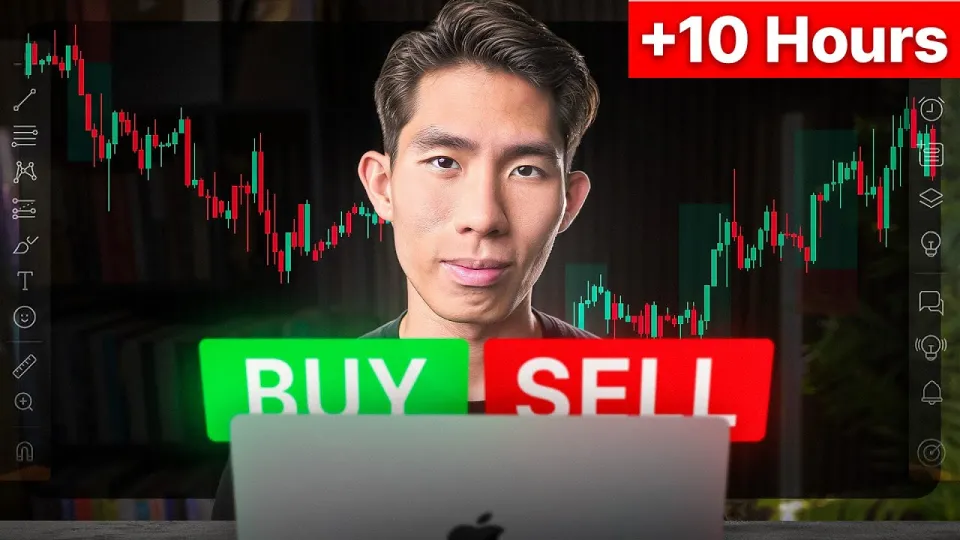
Video: How to Start Day Trading in 2026 (Full 10-Hour BEGINNER Course)
Need articles like this for your video? They help promote it on YouTube and Google — order them in the Telegram bot @sat_sit_bot. It writes articles around your video, embeds the video and publishes them on popular niche websites (no ads). Your first 50 articles are free.
· based on the channel Brad Goh (The Trading Geek)
Key takeaways
- Start with a demo account and a written trade plan before funding a live account; many beginners blow several accounts in their first year.
- Learn market structure, supply and demand, order blocks, inducements and liquidity before adding any strategy to a chart.
- Risk management comes before profit targets: fixed risk per trade and a mechanical plan beat discretionary guessing.
- A 10-hour beginner course can compress months of scattered learning, but screen time and journaling still do the real work.
- Prop firm challenges and mentorship programs are optional accelerators, not a substitute for a tested system.
Trading is the business of buying and selling financial instruments, such as currencies, indices or crypto, to profit from short-term price movement, and the fastest way to start in 2026 is to learn market mechanics on a demo account, write a mechanical trade plan with fixed risk, and only then fund a small live account. Brad Goh (The Trading Geek) built a 10-hour beginner course around exactly that sequence, and his mentorship program, which you can join through the 1% Club registration page, follows the same structure: foundations first, technical analysis second, strategies third, psychology last.
What trading actually requires from a beginner
Trading rewards preparation, not enthusiasm, and the first job is to understand what you are trading and with what tools. In forex, the instrument is a currency pair whose price reflects the relative strength of two economies; in crypto and indices the mechanics differ, but the questions are identical: what moves price, when are you allowed to enter, and how much can you lose.
The minimum stack looks like this:
- A charting platform with multiple timeframes, from monthly down to one minute.
- An economic calendar, because rate decisions and inflation prints move currencies faster than any pattern.
- A trading journal, separate from the platform, where every trade is recorded with the reason for entry and exit.
- A broker with regulated oversight and transparent spreads, or a prop firm if you want to trade someone else's capital.
- A written plan that states session times, instruments, risk per trade and maximum daily loss.
Most beginners skip steps three and five, which is why the same mistakes repeat: entering late, exiting early, and sizing positions by feeling instead of by rule. A journal turns those feelings into data you can fix.
Market mechanics: structure, liquidity and order flow
Price moves because institutions need liquidity to fill large orders, and reading that need is the core skill behind smart money concepts. Instead of drawing support and resistance lines and hoping, you learn to mark swing highs and lows, identify where resting orders sit, and wait for price to sweep those levels before continuing in the intended direction.
The vocabulary is worth learning precisely, because each term answers a different question:
- Market structure shows whether buyers or sellers control the chart, through higher highs and higher lows or the reverse.
- Multi-timeframe structure keeps you aligned: a bullish daily chart makes a bearish five-minute setup a pullback, not a reversal.
- Institutional supply and demand marks zones where large orders were previously filled and may be filled again.
- Order blocks are the candles that produced the move which broke structure, and they often act as the entry area on a return.
- Inducements are the traps that pull retail traders in before the real move, usually a small consolidation above a level you were watching.
- Liquidity sweeps are the wicks through obvious highs or lows that trigger stops and fuel the actual direction.
- Order flow is the sequence of displacement and retracement that tells you whether the move has participation behind it.
None of this replaces risk management, and that is the part beginners underrate most. A trader who risks one percent per trade can be wrong six times in a row and still have most of the account intact; a trader who risks ten percent is out after a bad week. Position size is calculated from stop distance, not chosen by comfort.
Building a mechanical trade plan you can actually follow
A mechanical plan removes decisions from the moment of execution, because every condition is defined before the chart is open. The structure that works for beginners has three parts: context, trigger and management.
Context answers where you are allowed to look for trades, for example a daily bias set by the most recent break of structure. The trigger defines the exact entry, such as a sweep of a prior low followed by a return into an order block on the five-minute chart. Management fixes stop placement beyond the zone that invalidates the idea, a target at the next pool of liquidity, and a rule for moving to break-even.
Two strategy templates appear repeatedly in beginner courses, and both are worth testing on demo before risking capital:
- The sniper entry waits for a liquidity sweep, a shift in structure and a return to the origin of the move, accepting fewer trades with tighter stops.
- The one-minute scalping approach takes many small trades inside a session, which demands faster execution and stricter discipline; many beginners find it harder than it looks once candles start moving.
Backtest each template over at least a few hundred trades on one instrument and one session before judging it. If the results are inconsistent, the problem is usually the rule set, not the market.
How much capital and time trading really demands
There is no minimum account size that guarantees anything, but there is a minimum level of realism. A small account with tight risk produces small returns, and expecting a few hundred dollars to generate a monthly income pushes traders into oversized positions, which is the most common route to blown accounts.
A more honest starting point:
- Fund only what you can lose without changing your life, and treat the first months as tuition.
- Target process metrics, such as trades taken according to plan, before targeting profit.
- Track drawdown, win rate and average risk-to-reward, because those three numbers explain almost every equity curve.
- Expect screen time: several months of daily chart review before patterns become obvious.
Prop firm challenges are popular because they offer access to larger capital, but they amplify both skill and mistakes. Passing one is easier with a tested plan and a hard daily loss limit than with a lucky streak.
Common beginner doubts and how to handle them
Doubt is normal, and the questions beginners ask are remarkably consistent across communities. The useful way to handle them is to convert each doubt into a testable condition.
- "I lost money in my first weeks, should I quit?" No, but you should stop trading live and return to demo until the plan produces consistent results over a meaningful sample.
- "Is one-minute scalping suitable for beginners?" Usually not at first, because execution speed and emotional pressure are highest there; start on higher timeframes and scale down later.
- "Do I need a paid mentorship?" Not strictly, but structured programs shorten the search; free content such as this course covers the foundations, while paid communities add feedback and accountability.
- "How long until I am profitable?" Most traders who reach consistency describe at least a year of deliberate practice, journaling and repeated strategy revisions.
Useful links
- 1% Club mentorship and registration
- 1% Club main site
- EdgeFlo all-in-one trading platform
- Recommended broker
- Recommended prop firm challenges
Final thoughts on starting trading the right way
Starting trading well is a sequence, not a shortcut: learn how price moves, mark structure and liquidity, write a mechanical plan with fixed risk, and only then put money on the line. The 10-hour beginner course from Brad Goh (The Trading Geek) is a useful spine for that sequence because it moves from foundations to market mechanics, then to strategies and mindset without skipping the boring parts. Treat free education as the map and your own journal as the territory, and expect the first months to be about repetition rather than income. If you want structured feedback and live coaching on top of that foundation, you can apply through the 1% Club mentorship page.
Questions & answers
How much money do I need to start trading in 2026?
There is no fixed minimum, but the amount should be money you can lose without affecting your life. Many beginners start with a small live account only after months on demo, because a tiny balance combined with tight risk produces tiny returns and tempts traders into oversized positions.
Is a 10-hour beginner course enough to become profitable?
A long course compresses years of scattered learning into a clear structure, but it cannot replace screen time and journaling. Use it to build a mechanical plan, then backtest and trade that plan on demo until the results are consistent before going live.
Why do beginners struggle with one-minute scalping?
One-minute charts demand fast decisions, and beginners often enter late, exit early or panic when candles accelerate. Higher timeframes give more time to evaluate structure and liquidity, so most traders should master those before scaling down.
Do I need a prop firm or mentorship to trade?
Neither is mandatory, but both can accelerate progress if the fundamentals are already in place. A prop firm amplifies both skill and mistakes, while a mentorship adds feedback and accountability that free content cannot provide.
Source: How to Start Day Trading in 2026 (Full 10-Hour BEGINNER Course) · Markdown version